WhatsApp
LinkedIn
X
Facebook
Telegram
Threads
Zero-carbon buildings are innovative and sustainable architectural structures designed to reduce the net amount of greenhouse gases emitted into the atmosphere by a building to zero—both during the construction process and throughout its operational lifespan. For the building sector—which accounts for approximately 40% of global carbon emissions—these buildings have become one of the most critical tools in the fight against the climate crisis. Unlike traditional buildings, they radically reduce energy demand and meet the remaining demand with renewable sources…
Types of Zero-Carbon Buildings and Their Differences
According to the World Green Building Council (WorldGBC), the net-zero carbon goal consists of two main components:
- Operational Net Zero Carbon: This refers to the annual carbon emissions resulting from energy consumed in a building’s daily operations—such as heating, cooling, ventilation, and lighting—being zero. This is achieved through high energy efficiency and on-site or nearby renewable energy generation.
- Net Zero Embodied Carbon: This refers to minimizing the carbon footprint across the entire lifecycle of materials—from their extraction from nature, through manufacturing at the factory, transportation to the construction site, construction, and finally demolition at the end of their useful life. To achieve carbon neutrality, innovative, low-emission materials (such as green cement and wood-frame construction) are preferred.
Key Design Strategies for Zero-Carbon Buildings
Achieving zero carbon emissions requires a series of mutually reinforcing engineering and architectural
strategies:
Principles of Passive Design
A building should make the most
of nature’s resources before resorting to mechanical systems.
- Optimal Orientation: Positioning that maximizes the benefits of sunlight and natural wind flow.
- High Thermal Insulation: Preventing heat loss through ultra-high-performance insulation on exterior walls, roofs, and windows.
- Thermal Mass Management: The use of building materials that help balance temperature fluctuations throughout the day.
Active and Efficient Systems
The minimum energy required is supplied using the most efficient technologies.
- Heat Pumps: Integration of electric heat pumps that extract heat from the air or ground, rather than fossil fuel-fired boilers (natural gas, coal, etc.).
- LED Lighting and Automation: Using smart building sensors to illuminate and climate-control only the areas where it is needed.
- Heat Recovery Ventilation (HRV): Mechanical systems that transfer heat from the stale indoor air to fresh outdoor air while expelling the stale air.
Renewable Energy Integration
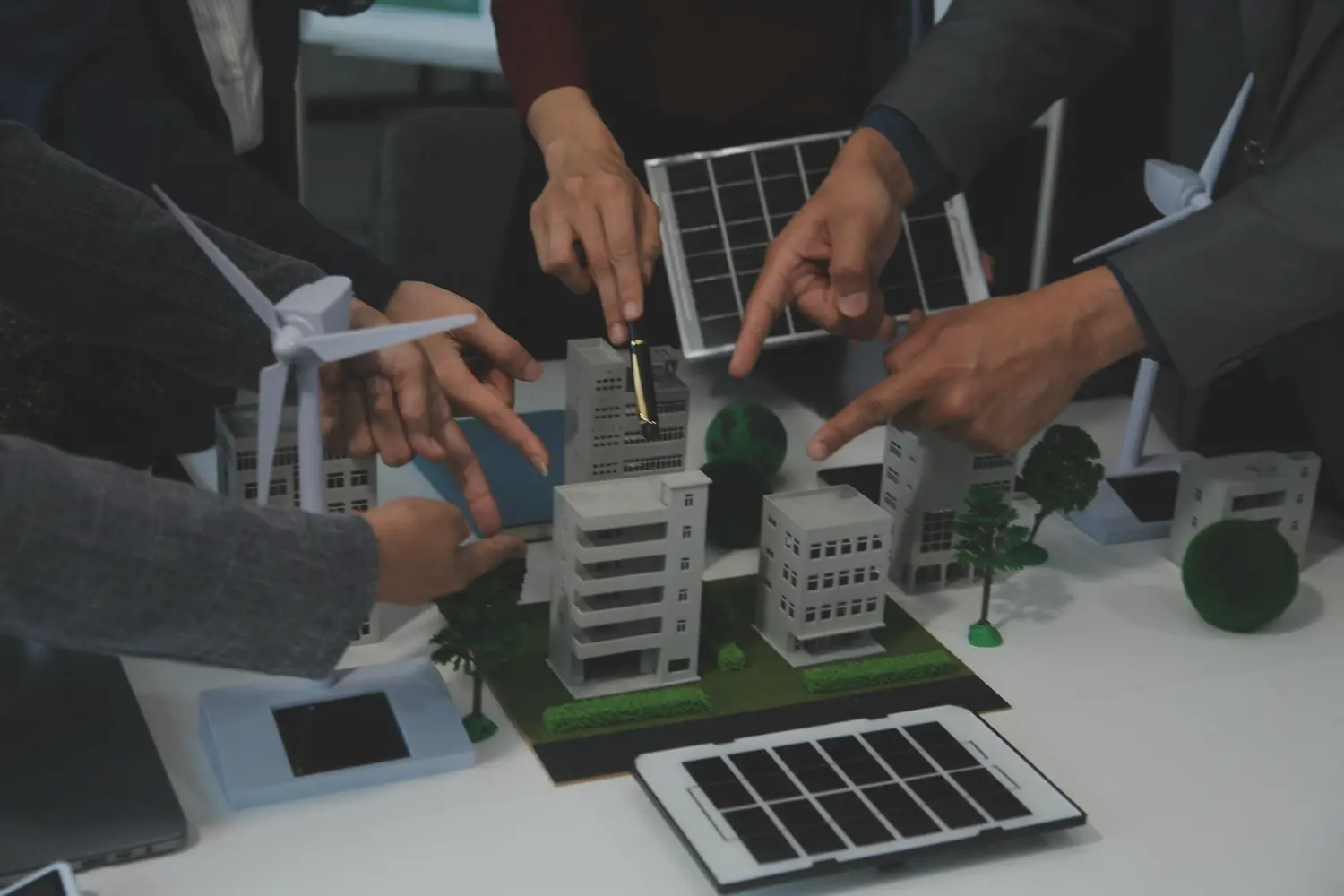
The building becomes a micro-power plant that generates its own clean energy.
- Roof- and Facade-Mounted Solar Power Plants: Electricity generation using photovoltaic solar panels.
- Micro Wind Turbines and Biomass: The use of alternative clean energy sources depending on geographic location.
The Benefits and Importance of Zero-Carbon Buildings
- Environmental Protection and Climate Goals: It directly contributes to the goals of the Paris Agreement, which aims to limit global warming to 1.5°C.
- Zero Energy Costs: By completely eliminating fossil fuel bills, it provides significant long-term economic savings.
- High Quality of Life: Thanks to natural materials and advanced ventilation systems, indoor air quality improves, creating healthy living spaces free of moisture, mold, and toxic gases.
- Energy Independence and Resilience: Structures that can operate independently of the central power grid or in a hybrid configuration (microgrid) can continue to function during disasters or energy crises.
The Current Situation Worldwide and in Turkey
- European Union: Under the Energy Performance of Buildings Directive (EPBD), it is becoming a legal requirement across the EU for new buildings to be net-zero emissions (ZEB).
- Türkiye: Having set a "Net Zero Emissions" target for 2053, Turkey is gradually incorporating the Nearly Zero-Energy Buildings (NZEB) concept into its legislation. Requirements for the use of renewable energy and high insulation standards in projects above a certain size are becoming stricter each year.
Zero-carbon-emission buildings are not just an eco-friendly trend—they are the sole standard model for the construction industry of the future. Although initial investment costs are slightly higher than those of traditional buildings, the energy savings, exemption from carbon taxes, and prestige they offer allow them to pay for themselves in a short time. Thanks to digitalization, artificial intelligence, and next-generation building materials, the construction of these buildings is becoming easier and more accessible every day.